5 out of 5 stars
“Mary, and the crew at Champion are professional, efficient and kind. I wouldn't want to go anywhere else for work on my car.”
Nicolas Cruz · Google Review
Charleston heat is harder on batteries than cold weather is. Sustained high underhood temperatures accelerate internal corrosion, which is why so many local batteries fail after three or four years — usually with no warning beyond one slow crank.
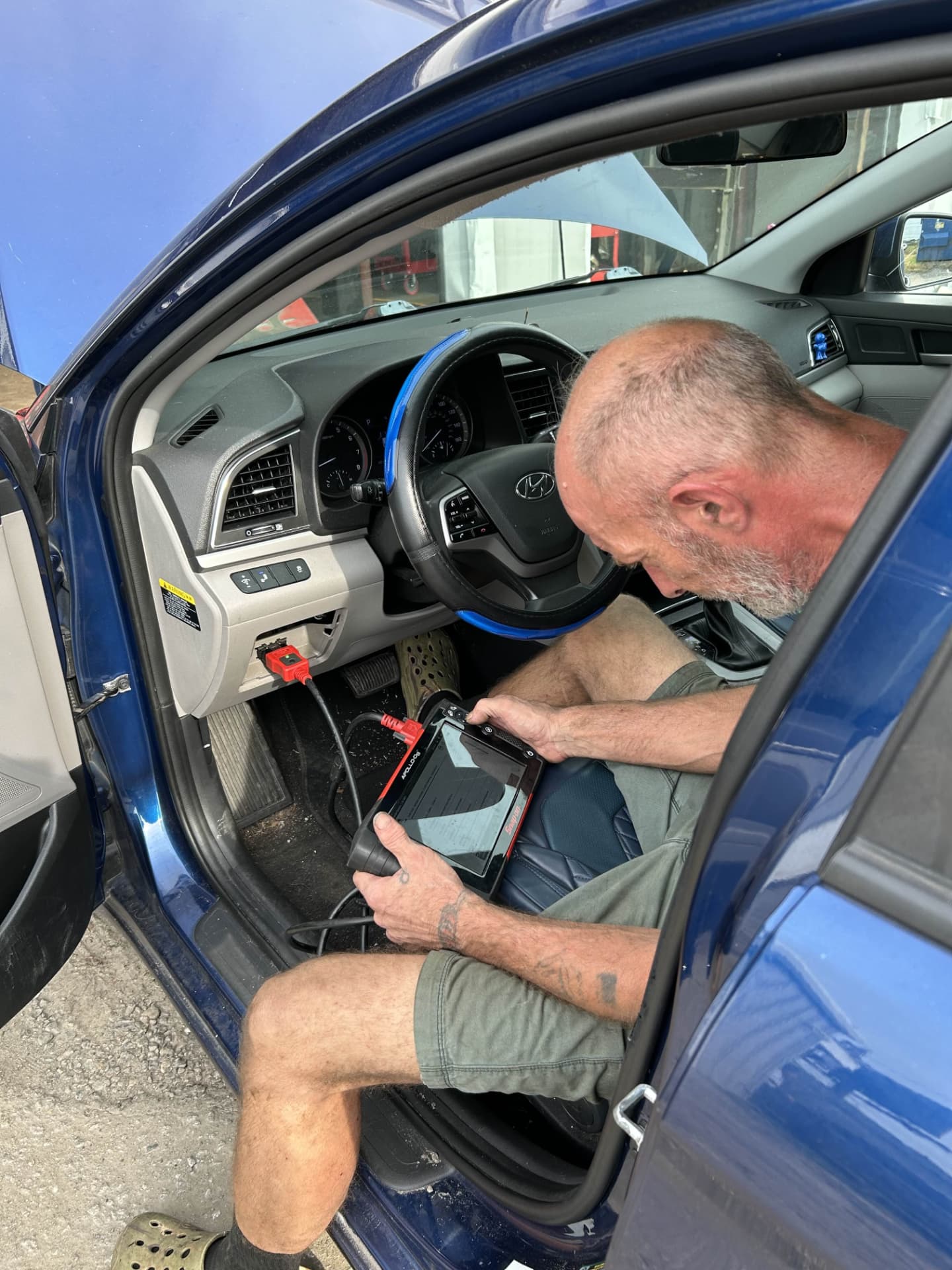
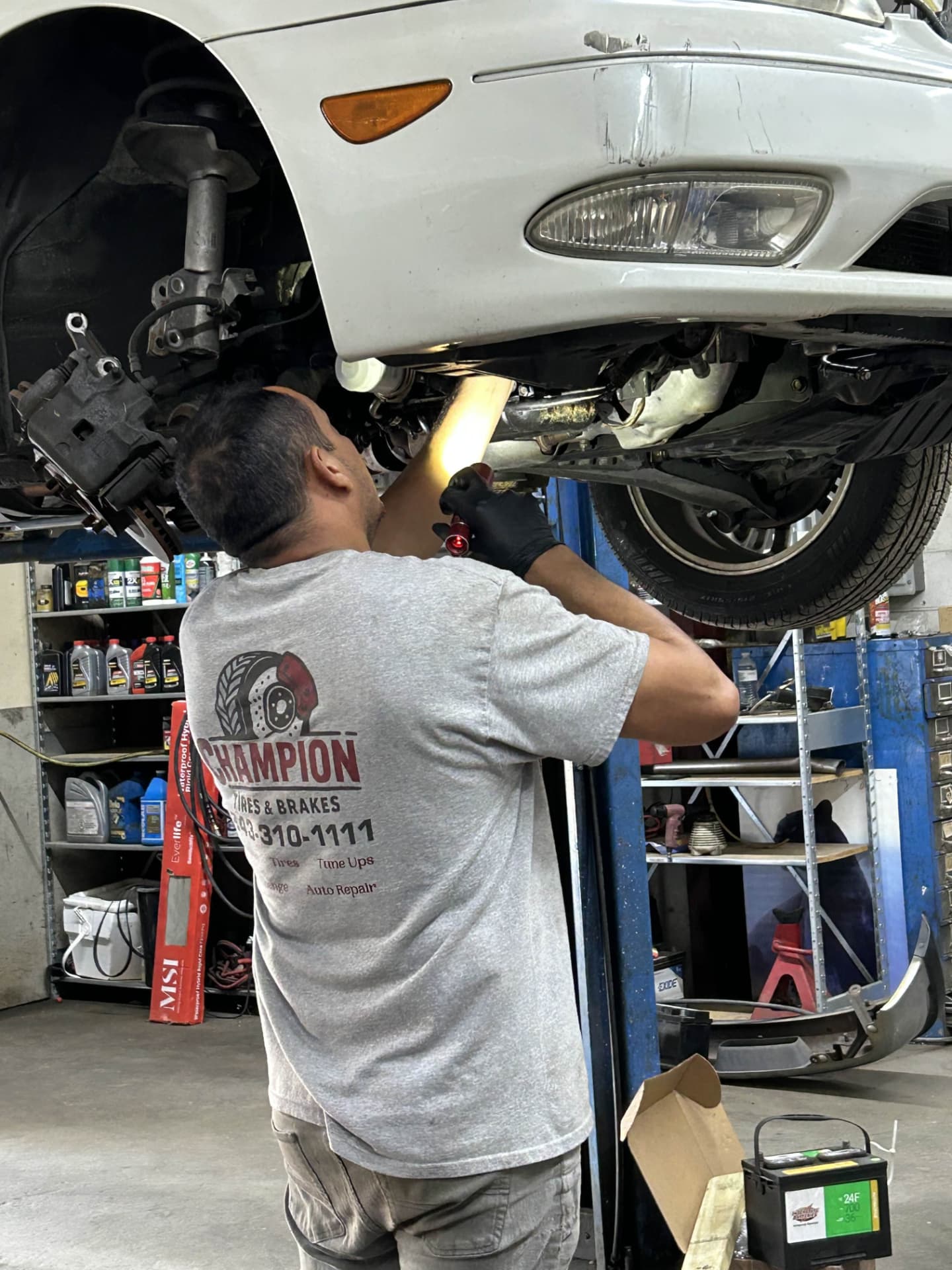
Champion Tires & Brakes tests batteries free of charge. If yours is weak, we'll show you the load test numbers and get a correct-group replacement installed the same visit. If the battery is fine, we keep testing — because a dead battery is often a charging system or parasitic drain problem, not a battery problem.
Testing is free. Battery pricing depends on group size and cold-cranking amps; AGM batteries used in start-stop vehicles cost more than standard flooded batteries.
Starting prices are estimates. Final pricing depends on your vehicle, the parts it needs, and what we find during inspection.
We confirm the battery is actually the problem before selling you one.
Alternator, cables, grounds and draw — so the new battery doesn't die too.
Correct group size, clean terminals, proper hold-down.
Charging voltage confirmed before you leave.
The three usual causes are a failing battery, an alternator not charging properly, or a parasitic drain — something staying awake after you lock the car. All three are testable, and replacing the battery alone won't fix the last two.
In the Lowcountry heat, three to five years is typical. Heat degrades batteries faster than cold does.
Yes. Drive in and we'll test it — no charge, no obligation.
It can. A battery with a shorted cell forces the alternator to work continuously at high output, which shortens its life.
“Mary, and the crew at Champion are professional, efficient and kind. I wouldn't want to go anywhere else for work on my car.”
“Great service and staff, especially front desk staff.”
Share a few details and we'll review your information and contact you with a price range. This is not an appointment request — walk-ins are always welcome.
Request a Quick Price Range · Walk-Ins Are Always Welcome
Monday–Saturday, 9:00 AM–6:00 PM · Closed Sunday